
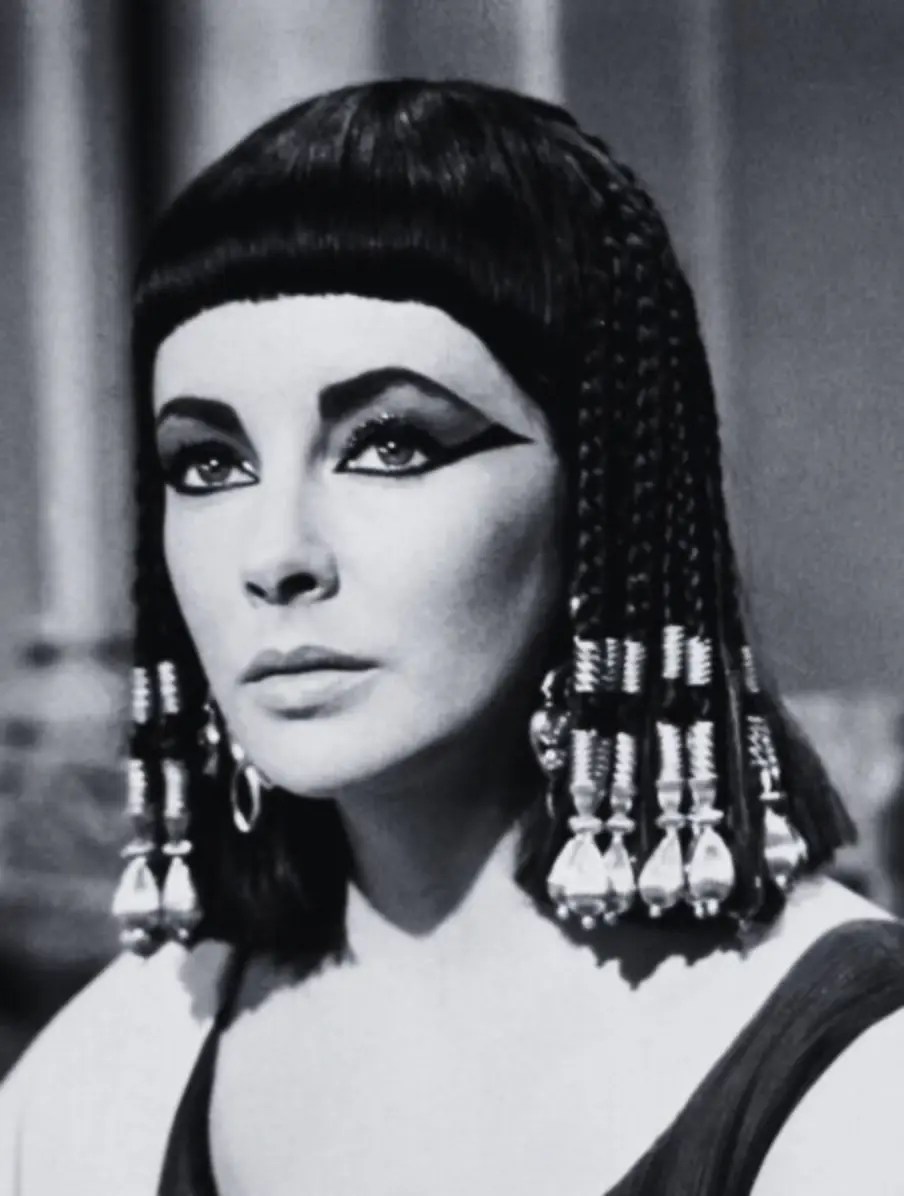
Cleopatra VII Philopator
Cleopatra VII Thea Philopator (69 BC – August 12, 30 BC) was the last active ruler of the Ptolemaic Kingdom of Egypt. A direct descendant of Ptolemy I Soter, one of Alexander the Great’s generals, she was the final sovereign of the Hellenistic dynasty that ruled Egypt for nearly 300 years. Known for her political acumen, linguistic abilities, and influential relationships with Julius Caesar and Mark Antony, Cleopatra played a pivotal role in the complex power struggles of the late Roman Republic.
Early Life and Background
Cleopatra was born in 69 BC in Alexandria, the capital of Ptolemaic Egypt. She was the daughter of Ptolemy XII Auletes, a pharaoh whose reign was marked by political instability and dependence on Roman support. Cleopatra belonged to the Macedonian Greek Ptolemaic dynasty, which ruled Egypt after the death of Alexander the Great.
Unlike her predecessors, Cleopatra embraced Egyptian language and customs. Ancient sources report that she spoke several languages fluently—possibly up to nine—allowing her to communicate directly with many of the diverse peoples within her kingdom. Her education included subjects such as philosophy, rhetoric, astronomy, and medicine, typical of a Hellenistic royal upbringing.
Accession to the Throne
After the death of Ptolemy XII in 51 BC, Cleopatra became co-ruler with her younger brother, Ptolemy XIII, whom she was compelled to marry as per dynastic custom. However, internal conflicts soon emerged, leading to Cleopatra’s exile from Alexandria in 48 BC by court officials supporting her brother.
Alliance with Julius Caesar
During the Roman civil war between Julius Caesar and Pompey, Cleopatra sought an opportunity to regain her throne. When Caesar arrived in Egypt, she secretly met him—according to legend, concealed in a rolled-up carpet—and formed a political and romantic alliance with the Roman general. With Caesar’s military support, Cleopatra reclaimed power after the Alexandrian War, which ended with the death of Ptolemy XIII.
Following her restoration, Cleopatra married her younger brother Ptolemy XIV, though she continued her relationship with Caesar. In 47 BC, she gave birth to a son, Ptolemy XV Philopator Philometor Caesar, commonly known as Caesarion, who was likely fathered by Caesar.
Cleopatra visited Rome between 46 and 44 BC and lived in a villa on the outskirts of the city. Her presence caused controversy, particularly due to Caesar’s public honors toward her, including a statue placed in the Temple of Venus Genetrix. After Caesar’s assassination in 44 BC, she returned to Egypt and had Ptolemy XIV killed, elevating Caesarion as her co-regent.
Rules and Domestic Policies
Cleopatra’s reign focused on stabilizing Egypt’s economy, maintaining political independence, and ensuring diplomatic alignment with Rome. She issued currency bearing her image, strengthened agriculture and trade, and supported native Egyptian religious institutions.
She also cultivated her image as the living embodiment of Isis, a prominent deity in Egyptian religion, which enhanced her authority among Egyptian subjects. Despite being of Macedonian descent, Cleopatra actively promoted Egyptian culture, rituals, and temples, helping preserve national identity amid increasing Roman influence.
Relationship with Mark Antony
In 41 BC, Cleopatra met Mark Antony, a leading Roman general and member of the Second Triumvirate. Their relationship quickly evolved into both a political alliance and a personal partnership. Cleopatra bore him three children: Alexander Helios, Cleopatra Selene II, and Ptolemy Philadelphus.
Cleopatra’s influence over Antony grew significantly. In 34 BC, during the Donations of Alexandria, Antony granted Cleopatra and their children territories across the Eastern Mediterranean, an act that alarmed Rome and incited hostility from Octavian (the future Emperor Augustus).
Battle of Actium and Cleopatra’s Death
Tensions between Antony and Octavian culminated in the Battle of Actium in 31 BC, a decisive naval conflict off the coast of Greece. Cleopatra and Antony’s forces were defeated, prompting their retreat to Egypt. In 30 BC, as Octavian’s troops approached Alexandria, Antony committed suicide, mistakenly believing Cleopatra had already died.
Cleopatra died shortly afterward, on August 12, 30 BC. The exact cause remains uncertain; while ancient sources suggest she allowed herself to be bitten by an asp (Egyptian cobra), modern historians theorize the use of poison. Her death marked the end of the Ptolemaic dynasty and the fall of Hellenistic Egypt, which was annexed as a Roman province.
Legacy and Historical Impact
Cleopatra’s death led to the execution of Caesarion by Octavian to eliminate any potential rival to Rome’s control. Her children with Antony were taken to Rome and raised by Octavia Minor, Antony’s Roman wife and Octavian’s sister.
Cleopatra has been the subject of fascination for centuries. Roman propaganda often depicted her as a manipulative seductress, a narrative countered by later portrayals that emphasized her intelligence, leadership, and political strategy. Literary works by Shakespeare and modern adaptations in film and television have contributed to her enduring legacy.
Historically, Cleopatra is recognized as one of the most influential female rulers in antiquity. She maintained Egypt’s independence during a period of Roman expansion and leveraged diplomacy, personal charisma, and cultural fluency to navigate the complex politics of her time.
In Popular Culture
Cleopatra has been portrayed in numerous works of art, literature, and cinema. Notable portrayals include the 1963 film Cleopatra starring Elizabeth Taylor and the Shakespearean tragedy Antony and Cleopatra. Her image continues to be a symbol of female power, allure, and political intelligence.
Interesting Facts About Cleopatra
- Cleopatra was not ethnically Egyptian. She was of Macedonian Greek origin, a descendant of Ptolemy I, one of Alexander the Great’s generals.
- She spoke several languages fluently. Ancient sources suggest she mastered at least seven, including Egyptian, Greek, and Latin.
- She was the first Ptolemaic ruler to adopt the Egyptian language. This helped her gain favor with the native population, setting her apart from her predecessors.
- Her beauty was not her most powerful asset. Contemporary accounts and surviving artifacts suggest her charm, intelligence, and political skill were far more captivating than her physical appearance.
- She studied and wrote about science and medicine. Cleopatra is believed to have authored works on pharmacology and cosmetics, though none have survived.
- She often portrayed herself as the goddess Isis. This religious and political strategy strengthened her image as a divine ruler.
- Cleopatra had four children. One with Julius Caesar (Caesarion) and three with Mark Antony. Only her daughter, Cleopatra Selene, lived to adulthood.
- The true cause of her death is still debated. While the popular story claims she died from an asp bite, some historians believe she used a fast-acting poison or was possibly assassinated.
- Her tomb has never been found. Despite extensive archaeological efforts, Cleopatra’s final burial site remains a mystery.
- Cleopatra played a direct role in Roman history. Her alliances with Julius Caesar and Mark Antony helped reshape the Roman world and contributed to the fall of the Roman Republic.
