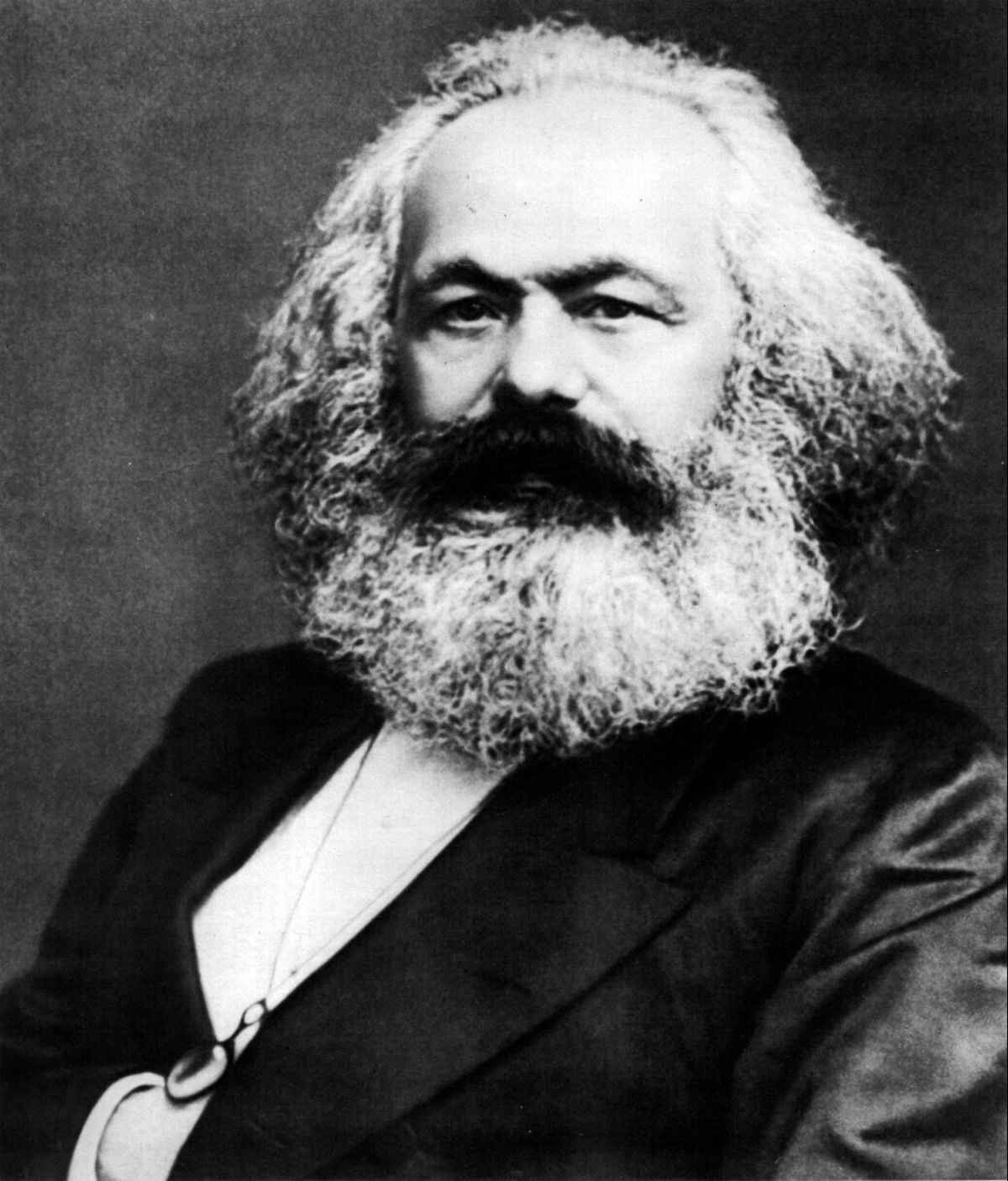
Karl Marx
Karl Marx (May 5, 1818 – March 14, 1883) was a German philosopher, economist, sociologist, historian, journalist, and revolutionary. He is widely regarded as one of the most influential thinkers in modern history and the primary founder of Marxism, a critical theory of capitalism and social change based on class struggle.
Early Life and Education
Karl Marx was born into a middle-class family in Trier, then part of the Kingdom of Prussia (now Germany). His father, Heinrich Marx, was a rationalist lawyer of Jewish descent who converted to Protestantism to avoid legal restrictions on Jews. Marx received a rigorous education influenced by Enlightenment ideals.
He began studying law at the University of Bonn but later transferred to the University of Berlin due to academic challenges. In Berlin, Marx became involved with the Young Hegelians, a group of left-wing intellectuals who reinterpreted the philosophy of Georg Wilhelm Friedrich Hegel from a critical perspective.
Philosophical Influences and Historical Materialism
During his university years, Marx shifted away from Hegelian idealism and was influenced by Ludwig Feuerbach’s materialist critique of religion. This led Marx to develop historical materialism, the theory that economic conditions and material production fundamentally shape society’s political and ideological structures.
Journalism, Exile, and Partnership with Friedrich Engels
In 1842, Marx began working as a journalist for the Rhenish Gazette in Cologne, where he criticized censorship, social inequality, and the exploitation of workers. After the paper was shut down by Prussian authorities, Marx went into exile in Paris in 1843 with his wife, Jenny von Westphalen.
In Paris, Marx met Friedrich Engels, forming a lifelong intellectual and political partnership. Together, they developed a critical analysis of capitalism and revolutionary ideas for societal change.
The Communist Manifesto and the Revolutions of 1848
In 1848, Marx and Engels published The Communist Manifesto, a landmark political pamphlet outlining class struggle as the engine of history and calling for proletarian revolution to overthrow capitalism and abolish private property.
The revolutionary uprisings across Europe that year failed, but Marx’s ideas gained prominence. After being expelled from several countries, Marx settled in London in 1849, where he lived for the rest of his life.
Das Kapital: Critical Analysis of Capitalism
While living in London and supported financially by Engels, Marx conducted extensive economic research at the British Museum. His seminal work, Das Kapital (1867), offers a deep analysis of the capitalist system, explaining its modes of production, the exploitation of labor, and inherent economic crises.
Key concepts introduced include surplus value, commodity fetishism, and primitive accumulation. Engels later published subsequent volumes after Marx’s death, based on his unfinished manuscripts.
Political Activism and the First International
Marx founded the International Workingmen’s Association, known as the First International, in 1864. The organization aimed to unite global labor movements but faced internal conflicts, especially with anarchist factions, leading to its dissolution in 1876.
Later Years and Death
Marx’s later years were marked by declining health and personal losses, including the deaths of his wife Jenny (1881) and daughter Eleanor (1883). Despite these hardships, he continued writing until his death in London on March 14, 1883.
He was buried at Highgate Cemetery, where a monument bears his famous quote: “The philosophers have only interpreted the world, in various ways; the point, however, is to change it.”
Legacy and Influence
Though not widely recognized during his lifetime, Karl Marx’s work profoundly influenced the 20th century. His critique of capitalism and theories of social change inspired revolutions, communist parties, and social movements worldwide.
Marxism remains a vital framework in economics, sociology, history, and political theory, sparking ongoing debate about its interpretations and applications.
Fun Facts about Karl Marx
- Karl Marx was an avid reader of classical literature and enjoyed works by Shakespeare, Goethe, and Homer, which influenced his critical thinking style.
- Despite his revolutionary ideas, Marx lived much of his life in financial hardship and relied heavily on the support of his close friend Friedrich Engels.
- Marx’s famous quote, “The philosophers have only interpreted the world in various ways; the point is to change it,” originally appeared in his Theses on Feuerbach, a short but impactful philosophical text.
- He spent many hours researching at the British Museum, where he studied economics, history, and politics to develop his groundbreaking theories.
- Marx was expelled from several European countries due to his political activities and radical writings before finally settling in London.
- He was a devoted family man despite his busy intellectual life; his wife Jenny von Westphalen and their children played significant roles in supporting his work.
- Marx’s writings inspired diverse political movements worldwide, from labor unions to revolutionary governments, yet he never lived to see most of their impacts.
- The term “Marxism” was coined after his death, as his ideas were further developed and adapted by his followers.
- Marx was critical not only of capitalism but also of some socialist ideas of his time, striving to create a scientific analysis rather than utopian visions.
- His legacy remains controversial but undeniably foundational for modern social sciences and political thought.