Claudette Colvin: The Teenage Hero History Nearly Forgot
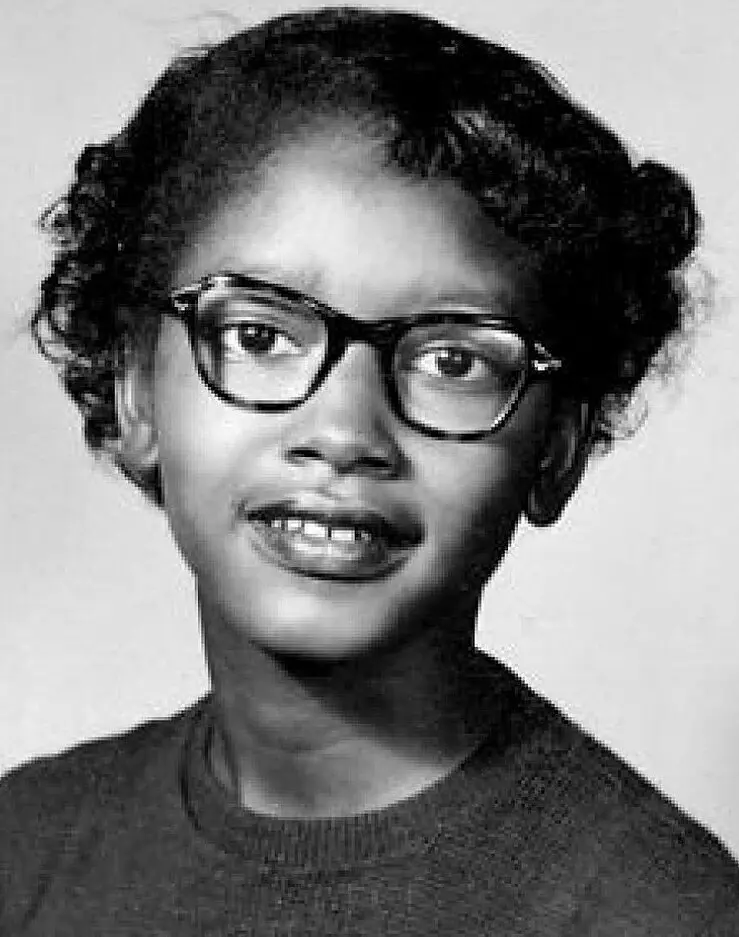
Claudette Colvin was only fifteen years old when she made a bold and historic decision that challenged the foundations of racial segregation in the United States. Long before Rosa Parks’ name was etched into American history books, Colvin had already taken a stand—or rather, refused to give up her seat—on a segregated bus in Montgomery, Alabama. Yet, for decades, her story remained largely overlooked.
Born on September 5, 1939, in Montgomery, Claudette was raised in a deeply segregated society. She grew up in a working-class Black neighborhood, where the scars of racism were etched into daily life. Her adoptive parents, Mary Jane and C.P. Colvin, provided a loving home, but the outside world constantly reminded her of the boundaries imposed by Jim Crow laws.
At school, Claudette was a bright student, known for her intelligence and curiosity. She attended Booker T. Washington High School, where she absorbed the teachings of Black leaders like Harriet Tubman and Sojourner Truth. These figures would deeply influence her developing sense of justice and resistance.
The Day That Changed Everything
On March 2, 1955, Claudette boarded a Montgomery city bus after school. She paid her fare and sat in a row that was technically allowed for Black passengers—but when the bus driver demanded that she move for a white passenger, she refused.
“I felt like Sojourner Truth was pushing down on one shoulder and Harriet Tubman on the other,” she later recalled. “History had me glued to the seat.”
Unlike Rosa Parks, who would make a similar protest nine months later, Claudette’s arrest did not spark a massive boycott or nationwide headlines. Instead, she was handcuffed, forcibly removed from the bus, and jailed. She was charged with violating segregation laws, disturbing the peace, and assaulting a police officer—despite there being no evidence of violence.
Why Was She Forgotten?
So why did the Civil Rights Movement choose to elevate Rosa Parks instead of Claudette Colvin? The answer is as complex as the movement itself.
Leaders at the time feared that Claudette, being a teenager and later becoming pregnant out of wedlock, would not present the «ideal» image to represent the struggle. They worried her story might be used against the cause. The movement’s leaders made a strategic decision to wait for a more “respectable” figure to become the face of the resistance—someone older, employed, and seen as morally unimpeachable. That person was Rosa Parks.
This sidelining wasn’t just political—it was deeply personal. Claudette felt alienated, even abandoned. While Parks was celebrated, Colvin returned to a quiet, often difficult life. Still, she never stopped believing in what she had done.
A Legal Trailblazer
Despite being pushed out of the spotlight, Claudette Colvin played a critical role in dismantling segregation in the legal system. In 1956, she became one of the four plaintiffs in Browder v. Gayle, the federal case that ultimately led to the Supreme Court ruling that segregated buses were unconstitutional.
That decision—not Rosa Parks’ protest alone—is what officially ended bus segregation in Montgomery. And Claudette Colvin’s testimony was central to that outcome.
Life After the Movement
Following her arrest and brief spotlight, Claudette faced immense challenges. She struggled to find employment in Montgomery due to her “troublemaker” reputation. Eventually, she moved to New York City, seeking a fresh start. There, she worked as a nurse’s aide in a Manhattan nursing home for over three decades.
Though her act of resistance had been pivotal, Claudette led much of her life in obscurity. She raised two sons and rarely spoke publicly about her role in the Civil Rights Movement—until decades later, when historians and journalists began to uncover her story.
Recognition, At Last
In recent years, Claudette Colvin has finally begun to receive the recognition she deserves. Books, documentaries, and academic studies have shed light on her bravery. In 2009, author Phillip Hoose published Claudette Colvin: Twice Toward Justice, a National Book Award finalist that reintroduced her to a new generation of readers.
In October 2021, at age 82, Claudette filed a petition to have her juvenile record expunged. She stated she no longer wanted to be seen as a “juvenile delinquent” but rather as a freedom fighter. The court agreed.
Her story is now part of school curricula across the United States. Students learn not only about Rosa Parks but also about the teenager who came before her—one who defied authority when she had every reason to stay silent.
A Legacy of Quiet Strength
Claudette Colvin’s courage came at a personal cost. But without her, the timeline of the Civil Rights Movement might look very different. Her defiance planted seeds that would grow into a nationwide movement. Though she lived in the shadows of history for too long, the truth of her impact can no longer be ignored.
She once said, “I knew I had to do it. People say I’m brave, but I felt I had no choice.”
In a time when silence was the safest path, Claudette Colvin chose resistance. And because of that, millions today enjoy freedoms that were once denied.
Interesting Facts About Claudette Colvin
- Claudette Colvin was only 15 years old when she stood up—by staying seated—against bus segregation in Montgomery.
- Her act of defiance happened on March 2, 1955, making her the first person to resist bus segregation in that city.
- At the time of her arrest, she was still a high school student at Booker T. Washington High School.
- Claudette refused to move because she had just learned about Black history heroes like Sojourner Truth and Harriet Tubman that same month in class.
- She was dragged off the bus by police, not gently escorted like later cases—highlighting the brutality she faced.
- Colvin became one of the main plaintiffs in Browder v. Gayle, the lawsuit that officially ended bus segregation in Alabama.
- Her story remained largely unknown because civil rights leaders at the time considered her “not the right symbol”for the movement.
- Despite her pivotal role, she worked for over 30 years as a nurse’s aide in New York City with little public recognition.
- In 2021, she had her juvenile record cleared, officially rewriting how the justice system viewed her actions.
- She once said:
«I knew then and I know now, when it comes to justice, there is no easy way to get it.»