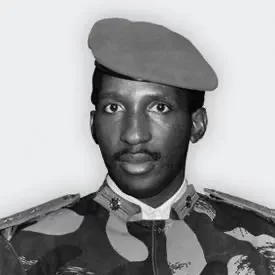
Thomas Sankara: Burkinabé Revolutionary Leader and President
Thomas Isidore Noël Sankara (December 21, 1949 – October 15, 1987) was a Burkinabé military officer, revolutionary, and politician who served as the President of Burkina Faso from 1983 until his assassination in 1987. Renowned for his radical social, economic, and political reforms, Sankara was a leading advocate for African self-reliance, anti-imperialism, and Pan-Africanism.
Early Life and Education
Born in Yako, in the northern region of the former French colony of Upper Volta (now Burkina Faso), Sankara came from a middle-class family of Mossi and Fulani heritage. Raised in a conservative Roman Catholic environment, he was originally expected to pursue priesthood but instead chose a military career.
He trained at the military academy in Kadiogo and furthered his education at the Military Academy of Antsirabe in Madagascar, where the 1972 anti-government uprisings influenced his political views. Additional military training in France and Morocco exposed him to Marxist and anti-colonial ideologies, which shaped his revolutionary principles.
Military Career and Political Rise
Sankara’s military career gained prominence after his role in the 1974 border conflict between Upper Volta and Mali. Although critical of the conflict, his leadership skills became evident.
During the early 1980s, Sankara held various government positions, including Secretary of State for Information in 1981, a role he resigned from due to political disagreements. Appointed Prime Minister in January 1983, he was soon dismissed and arrested in May for his radical political views.
Following widespread protests against his arrest, a coup led by Captain Blaise Compaoré on August 4, 1983, overthrew the government, and Sankara was installed as President of the newly formed National Council of the Revolution (CNR).
Presidency of Burkina Faso (1983–1987)
Renaming Upper Volta to Burkina Faso
One of Sankara’s first presidential acts was renaming Upper Volta to Burkina Faso, meaning “Land of Upright People” in Mossi and Dioula. This change symbolized his goal of creating a strong national identity, pride, and independence from colonial legacies.
Comprehensive Social and Economic Reforms
Sankara implemented bold reforms to reduce poverty and promote self-sufficiency:
- Launched mass vaccination campaigns, immunizing over two million children against diseases like meningitis and yellow fever.
- Established widespread literacy programs, significantly lowering illiteracy rates.
- Instituted land redistribution policies that boosted agricultural productivity and food security.
- Led extensive reforestation efforts, planting more than 10 million trees to fight desertification.
- Promoted infrastructure projects, including homes, schools, roads, and railways, without incurring foreign debt.
Advancing Women’s Rights and Gender Equality
Sankara was a pioneer in promoting gender equality in Africa by:
- Banning female genital mutilation (FGM), forced marriages, and polygamy.
- Encouraging women’s participation in government, the military, and public service.
- Declaring March 8 as the national Women’s Day.
- Advocating for equal pay and labor rights for women.
Foreign Policy and Anti-Imperialism
Adopting a firm anti-imperialist and non-aligned foreign policy, Sankara rejected conditional foreign aid and condemned international financial institutions such as the IMF and World Bank.
At the 1987 Organization of African Unity (OAU) summit, he called for African nations to unite and cancel external debts, denouncing them as a form of neocolonial exploitation.
Ideology and Leadership
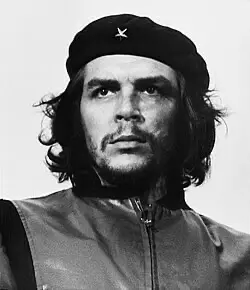
A committed Marxist-Leninist and Pan-Africanist, Sankara drew inspiration from revolutionary figures like Fidel Castro, Che Guevara, and Kwame Nkrumah.
Known for his modest lifestyle, Sankara:
- Reduced his presidential salary.
- Refused luxury items, opting instead for a modest Renault 5.
- Lived simply to set an example of integrity and solidarity with the people.
His government emphasized civic participation, transparency, and national unity through community volunteer programs.
Opposition and Controversies
Despite his popularity among youth and working classes, Sankara faced opposition from traditional elites, political opponents, and foreign interests, especially French influence in the region.
His government banned opposition parties and restricted press freedom, leading some critics to label his regime authoritarian.
Assassination and Aftermath
On October 15, 1987, Thomas Sankara was assassinated in a coup led by his former ally, Blaise Compaoré, who seized power immediately after.
Sankara’s death was initially reported as an accident, but later investigations confirmed it was a politically motivated assassination.
Compaoré ruled Burkina Faso for 27 years until he was ousted in a popular uprising in 2014. During his tenure, many of Sankara’s reforms were rolled back.
Posthumous Recognition and Legal Proceedings
Decades after his death, Sankara’s family and activists pushed for justice. In 2021, a trial began investigating the assassination.
In April 2022, Blaise Compaoré and associates were convicted in absentia and sentenced to life imprisonment for their roles in the killing.
In 2023, the Burkina Faso government officially reburied Sankara with honors and inaugurated a mausoleum and memorial at the site of his death.
Legacy
Thomas Sankara remains an iconic symbol of anti-corruption, African self-determination, and revolutionary change.
Known as the “African Che Guevara”, his progressive views on gender equality, education, environmental conservation, and anti-imperialism continue to inspire political and social movements across Africa and worldwide.
His speeches on African unity and debt cancellation are frequently cited in contemporary discussions on decolonization and development.
Notable Facts About Thomas Sankara
- Thomas Sankara was one of the first African heads of state to officially ban female genital mutilation (FGM), marking a groundbreaking advancement in women’s rights in Africa.
- During his presidency, Sankara reduced his own salary to an amount comparable to that of a school teacher’s wage, showcasing his commitment to government austerity and social equality.
- Unlike many political leaders, Sankara rejected luxury cars and personally drove a modest Renault 5, symbolizing his simple lifestyle and strong connection with ordinary Burkinabé citizens.
- Known as “the African Che Guevara,” Sankara’s revolutionary leadership and charisma made him a lasting icon of African resistance, social justice, and political change.
- Under Sankara’s leadership, Burkina Faso planted over 10 million trees through an ambitious reforestation program aimed at combating desertification and protecting the environment.
- Despite his military background, Sankara championed citizen participation and government transparency, organizing community volunteer campaigns that promoted national unity and civic engagement.
- Sankara established March 8 as National Women’s Day in Burkina Faso, a celebration that continues to highlight the importance of gender equality and women’s empowerment across the country.