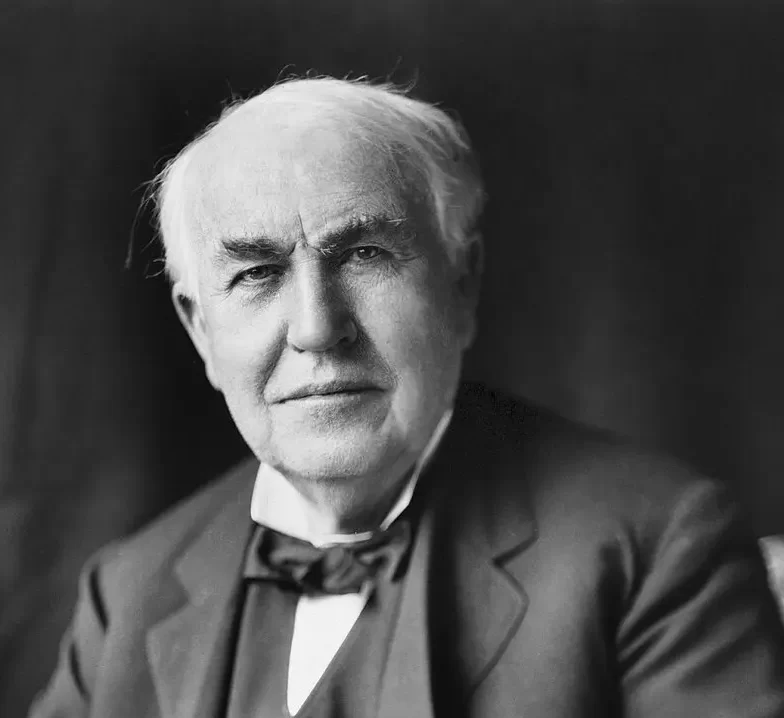
Thomas Alva Edison: American Inventor and Innovator
Thomas Alva Edison (February 11, 1847 – October 18, 1931) was a pioneering American inventor, scientist, and entrepreneur. Recognized as one of history’s most prolific inventors, Edison held over 1,000 U.S. patents and many more internationally. His inventions and innovations transformed multiple industries including electricity, recorded sound, motion pictures, and telecommunications.
Among his most significant inventions are the phonograph, the commercially viable incandescent light bulb, the kinetoscope, and the development of integrated electric power systems. Edison also founded influential companies such as General Electric (GE), which remains a major global industrial corporation.
Early Life and Education of Thomas Edison
Born in Milan, Ohio, Edison was the youngest of seven children in a middle-class family. His parents were Samuel Edison Jr. and Nancy Elliott Edison. The family relocated to Port Huron, Michigan, in 1854.
Edison’s formal education lasted only a few months due to his unconventional learning style. His mother, a former teacher, provided homeschooling and encouraged his curiosity in science and experimentation.
As a teenager, Edison worked as a newspaper seller on trains, where he also began conducting chemical experiments and learning telegraphy — experiences that deeply influenced his future inventions.
Inventive Career and Key Patents
Early Inventions and the Phonograph
In 1869, Edison moved to New York City and secured his first patent for an electric vote recorder. During the 1870s, he developed improvements to the telegraph and other electrical devices.
In 1877, Edison invented the phonograph, the first device capable of recording and reproducing sound. This breakthrough invention launched the recorded sound industry and established Edison’s reputation worldwide.
The Incandescent Light Bulb and Electric Power
One of Edison’s landmark achievements was the creation of a practical, long-lasting incandescent light bulb in 1879. Unlike previous versions, Edison’s carbon-filament bulb was durable and commercially viable.
In 1882, he launched the world’s first public electric utility system in New York City, establishing a complete system of generators, wiring, and electrical appliances that laid the groundwork for today’s electric power grids.
Innovations in Motion Pictures
In collaboration with William Kennedy Laurie Dickson, Edison developed the kinetoscope, an early device for viewing moving images. He also built the Black Maria, the first film production studio, where numerous short films were produced.
Although the Lumière brothers later advanced cinema technology with projected films, Edison’s contributions were foundational in the birth of the motion picture industry.
The War of Currents: AC vs. DC
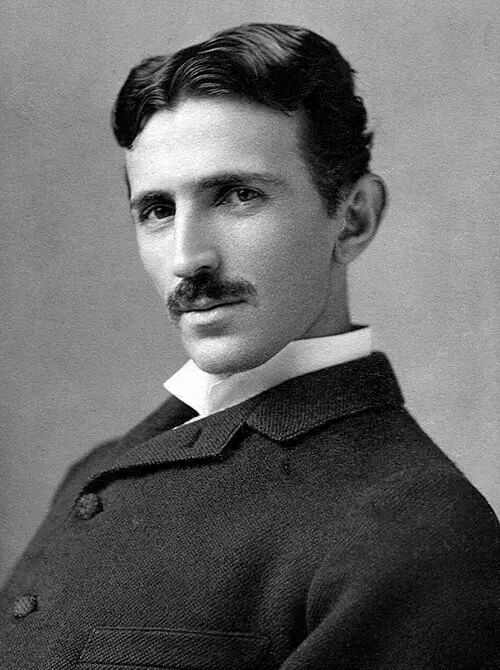
During the 1880s, Edison advocated for the use of direct current (DC) electrical systems for power distribution. Competing with him were Nikola Tesla and George Westinghouse, who promoted alternating current (AC), a more efficient solution over long distances.
This rivalry, known as the War of the Currents, involved Edison publicly demonstrating the dangers of AC. Despite his efforts, AC ultimately became the global standard for electrical power due to its efficiency and safety.
Additional Inventions and Contributions
Beyond his most famous inventions, Edison developed many other technologies, including:
- The quadruplex telegraph, enabling multiple messages on a single wire.
- Advanced storage batteries for electric vehicles.
- The electric pen, a precursor to tattoo machines.
- Wax cylinder and disc-based sound recording systems.
- Experiments in reinforced concrete for construction.
Edison held 1,093 U.S. patents plus many international patents. He pioneered industrial research by leading teams of engineers and scientists at his laboratories.
Laboratories and Business Ventures
Edison established the world’s first industrial research lab in Menlo Park, New Jersey, in 1876. This facility revolutionized innovation by introducing systematic research and development.
Later, he expanded his operations to a larger lab complex in West Orange, New Jersey, continuing work until his death.
Edison’s company, Edison General Electric, merged in 1892 with Thomson-Houston Electric Company to form General Electric (GE), which grew into a major multinational corporation.
Later Life and Death
Edison remained active in innovation throughout his life. During World War I, he worked with the U.S. government on military technologies including naval defense systems.
He died at his home in West Orange on October 18, 1931, aged 84. In a nationwide tribute, Americans dimmed electric lights for one minute. Edison was buried on his Glenmont estate in New Jersey.
Legacy and Impact
Thomas Edison’s innovations shaped the technological revolution of the late 19th and early 20th centuries. His industrial research methods and entrepreneurial vision influenced modern invention and business practices.
Numerous schools, museums, and awards honor his legacy, including the Thomas Edison National Historical Parkand the prestigious Edison Medal in electrical engineering.
While controversies exist around his rivalry with Nikola Tesla and his management style, Edison’s profound impact on global technology, communication, and industry remains undisputed.
Interesting Facts About Thomas Edison
- Thomas Edison was partially deaf in one ear, a condition believed to have helped him focus better on his inventions by reducing distractions.
- He reportedly worked up to 20 hours a day during his most productive periods, often taking short naps instead of full nights of sleep to maximize his creativity.
- Edison’s invention of the incandescent light bulb was not the first electric lamp, but his improvements made it practical, durable, and affordable for everyday use.
- He patented the first practical stock ticker, revolutionizing how financial information was transmitted in the 19th century.
- Edison held a patent for the first motion picture camera (kinetoscope), although the development of projected film was achieved later by other inventors.
- Despite his success as an inventor, Edison was afraid of the dark as a child, which is ironic considering his role in developing electric lighting.
- He named his home laboratory “Glenmont”, where he spent his later years inventing and conducting research.
- Edison’s famous rivalry with Nikola Tesla during the War of Currents was intense, but both inventors shared a mutual respect for each other’s intelligence and contributions.
- He experimented with building a concrete house and concrete furniture, aiming to create affordable, durable, and fireproof housing solutions.
- Edison’s innovations laid the foundation for multiple industries, and he strongly believed in teamwork, employing large teams of specialists at his Menlo Park and West Orange laboratories.